
If you have been told an underbite means jaw surgery — or you have quietly assumed it does — that one worry is often what keeps people from getting an answer for years. It is also the first thing we set out to settle, precisely, before anything else.
At The Orthospaceship in Beverly Hills, Dr. Chantal Hakim begins every underbite evaluation the same way: not with a treatment plan, but with an accurate picture of what is actually holding the bite where it sits. An underbite — when the lower teeth close ahead of the upper teeth — can come from the teeth, from the jaws, or from both. Those are genuinely different situations, and they lead to genuinely different paths. Knowing which one you have changes everything that follows. For patients across Los Angeles, that clarity is the difference between years of assuming the worst and a plan built on what is real.
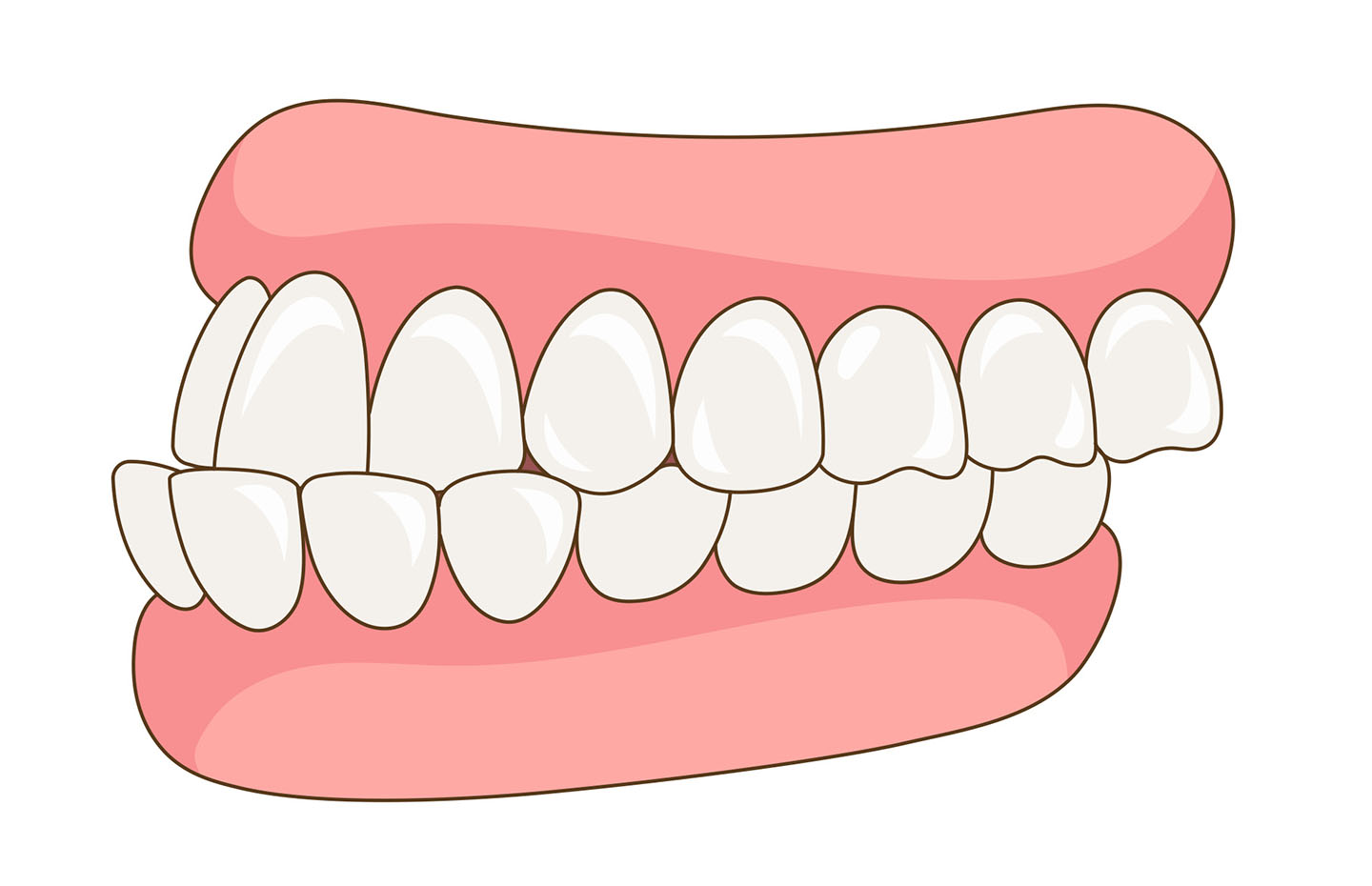
What an underbite really is: dental vs. skeletal
In a healthy bite, the upper front teeth rest slightly in front of the lower front teeth when you close. An underbite is the reverse: the lower teeth, or the whole lower jaw, sit ahead of the upper front teeth. Clinically it is a Class III malocclusion, and when the lower jaw itself protrudes, you may hear the term mandibular prognathism. When only the front teeth are involved, it is sometimes called an anterior crossbite.
But not every underbite is the same — and the difference decides everything:
- Dental underbite — the teeth are misaligned (the lower front teeth sit ahead of the uppers), but the upper and lower jaws are proportioned normally. Often correctable with braces or clear aligners alone.
- Skeletal underbite — the jaw drives it: the lower jaw sits forward, a protruding lower jaw where the jaw bones, not just the teeth, set the bite. May need orthodontic treatment coordinated with jaw surgery.
Most underbites are a blend of the two, ranging from mild cases to severe skeletal underbites.
Where does an underbite come from? Most often, genetics — the size and position of the jaws is largely inherited, which is why underbites tend to run in families. In children, certain habits can contribute as well, including prolonged pacifier use, thumb sucking, and tongue thrusting.
Here is why the distinction matters so much: a dental and a skeletal underbite can look identical in the mirror, but they call for very different treatment options. Because appearance alone cannot tell them apart, accurate classification relies on a clinical exam and 3D imaging of the jaws — which is what determines whether an underbite is corrected with braces or clear aligners, or with orthodontics coordinated with surgery. That is why we do not guess. We measure.
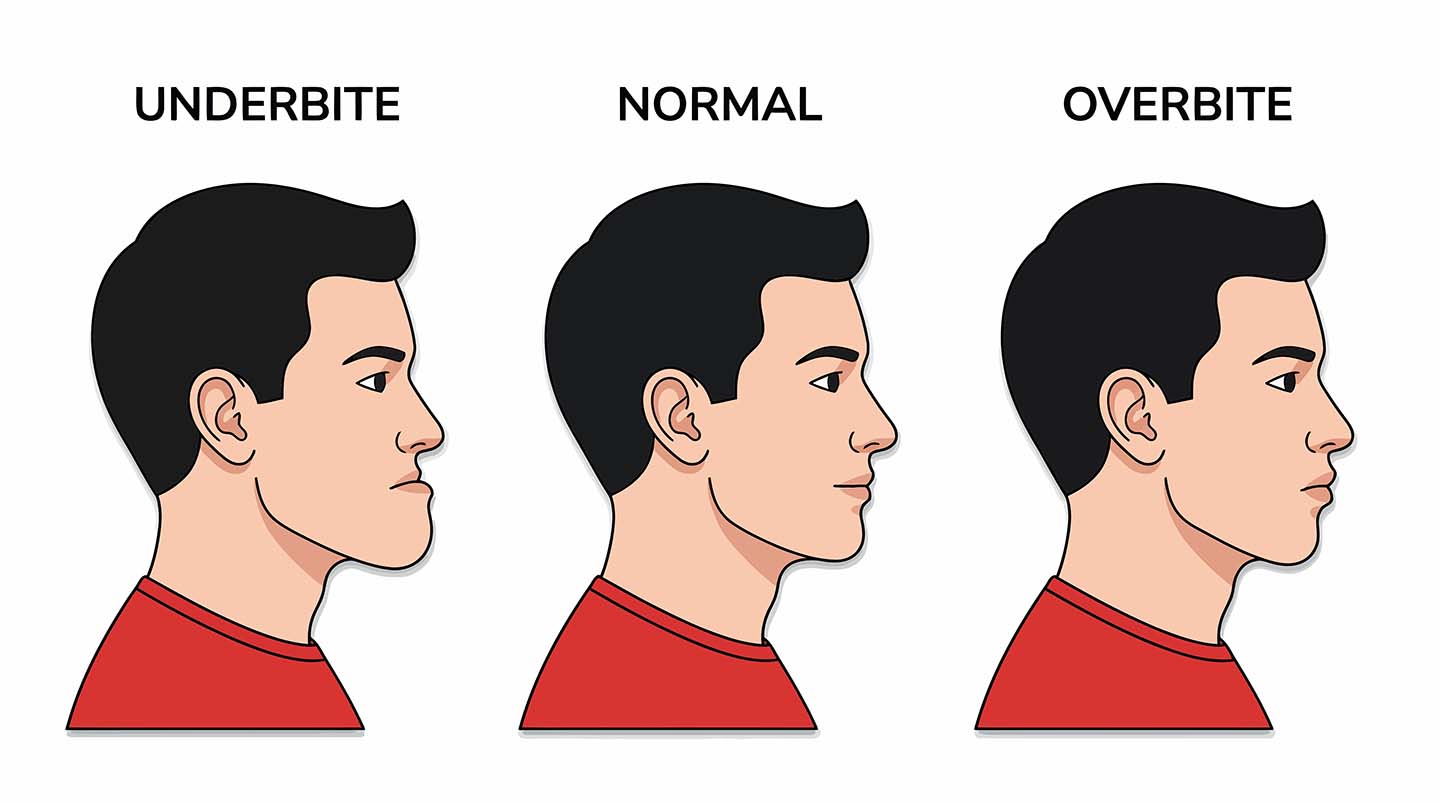
Why the right diagnosis comes first
Most practices that suspect a skeletal underbite refer the patient out for advanced imaging and a surgical opinion before anyone can say what is really going on. That referral loop is where the fear grows — and where months disappear.
We evaluate underbites differently, for two connected reasons. First, the philosophy: both Dr. Chantal and Dr. Isaac Hakim are trained in the Roth Williams functional-occlusion philosophy, which begins from the jaw joint's ideal position and works outward. For an underbite, that joint-first starting point is what makes the classification accurate, because it separates where the jaw rests from where the teeth have adapted. Second, the technology: we own the imaging that answers the question. Our in-house DEXIS i-CAT FLX 3D CBCT produces the same three-dimensional view of the jaws, joints, and airway that most offices refer out for — which means you can get a precise answer in one visit, from the doctors who will actually treat you.
An underbite is rarely only a cosmetic matter. When the lower jaw sits forward, chewing loads unevenly, front teeth can wear at the edges, and the jaw joints carry the imbalance over time — a pattern that, for some people, contributes to temporomandibular joint (TMJ) disorder. Because an underbite affects oral health and daily function, not just appearance, reading the whole structure — teeth, jaws, joints, and how they function together — is what allows a plan that corrects the bite and protects it for the long term, rather than one that looks right briefly and drifts.
In one visit, you will know whether your underbite is dental, skeletal, or both — and what that means for you.
Book a complimentary underbite evaluation.
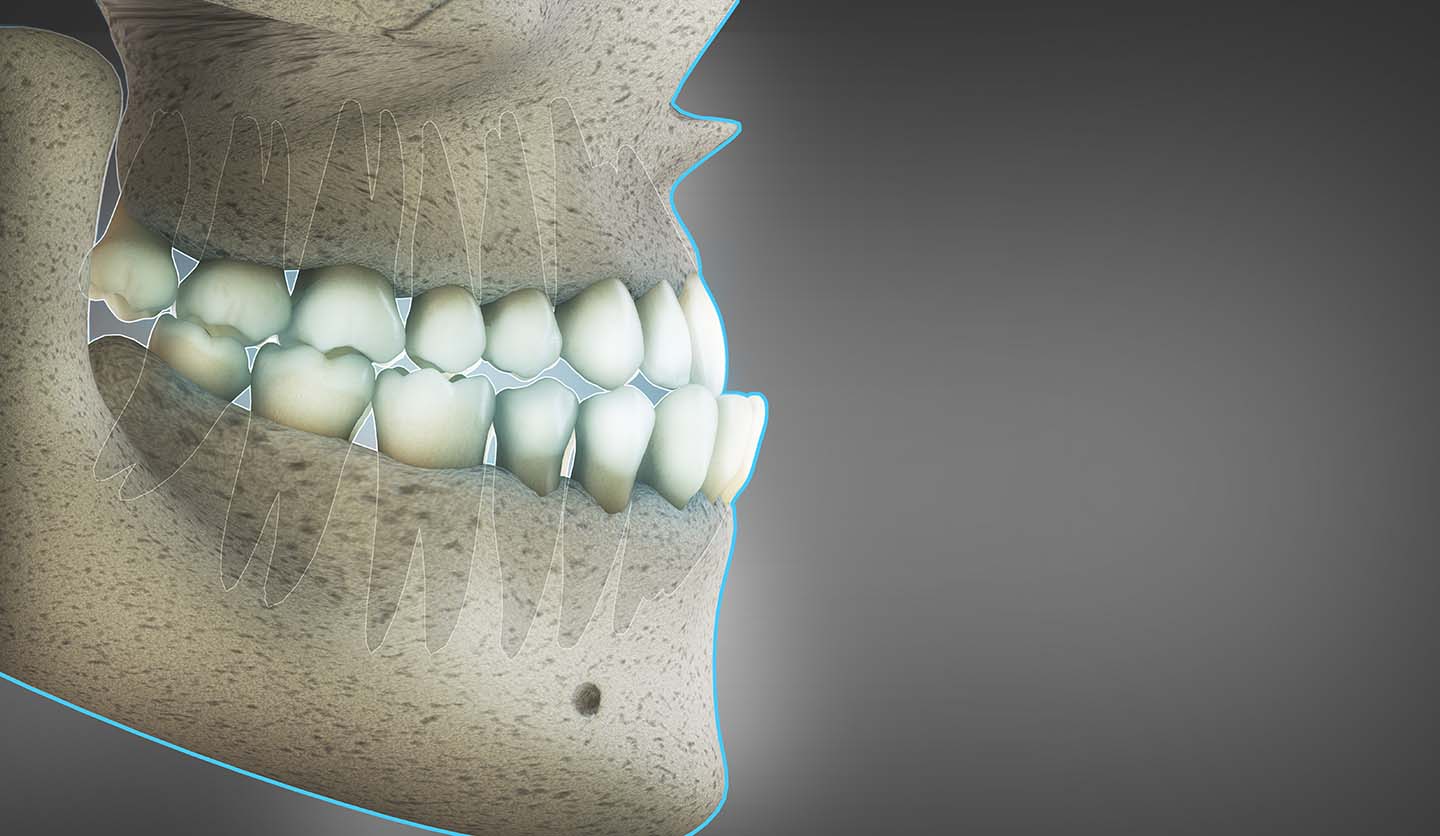
Caption goes here.
Underbite treatment options in Beverly Hills
Because underbites vary so widely, your underbite treatment is chosen from the diagnosis — never the reverse. How we fix an underbite depends entirely on what is causing it, and once we know what we are working with, the treatment options for underbite correction generally fall into three paths.
If your underbite is dental — often correctable without surgery. It can frequently be corrected with orthodontic treatment alone — clear aligners such as Invisalign, or braces — to reposition the teeth into a healthy, functional bite. Braces are worn until the teeth reach their correct position, which restores proper jaw alignment across the front teeth; for image-conscious adults, ceramic braces and clear aligners keep treatment discreet. These are the cases most often assumed to need surgery when they do not.
If your child is still growing — there may be a window to guide the jaw. In younger patients — while the baby teeth are still present or the permanent teeth are coming in — a developing jaw can sometimes be guided. Early, growth-modifying appliances such as an upper-jaw expander, a reverse-pull face mask, or a chin cup can influence how the upper and lower jaws relate before growth is complete, in some cases reducing the severity of a skeletal underbite or the likelihood of jaw surgery later. This window does not stay open, which is why an early evaluation is worthwhile even when treatment itself can wait.
If your underbite is skeletal and growth is complete — braces plus jaw surgery may be the path. Correcting the jaw relationship may involve coordinating orthodontics with orthognathic (jaw) surgery — an approach known as surgical orthodontics, in which braces align the teeth and jaw-repositioning surgery corrects the underlying skeletal relationship. This is where our approach matters most: Dr. Isaac Hakim completed the Arnett Course on Orthodontics and Orthognathic Surgery, and we plan these cases in-house, coordinating with your oral surgeon from the first appointment — so if underbite surgery is part of the plan, it is precise, well-sequenced, and never a surprise handed off to a stranger. Where a severe underbite can be managed without surgery, we will tell you that, too.
Whatever the path, the result is held in place with a retention plan — usually a retainer — so the new bite and jaw relationship stay stable long after active treatment ends.
Is it ever too late to fix an underbite?
The two questions we hear most about underbites sit at opposite ends of life, and both have reassuring answers.
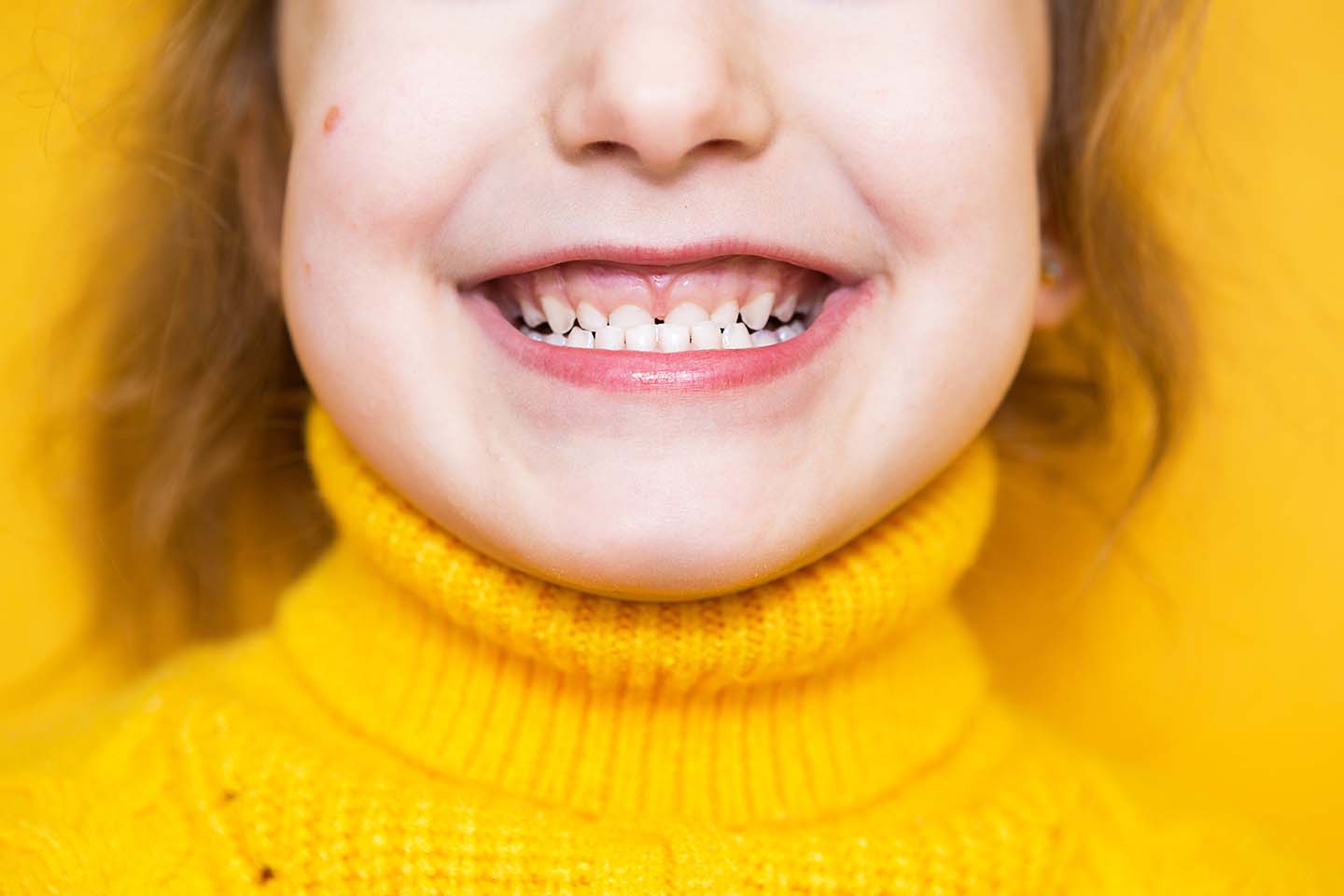
For Parents
An underbite is one of the few bite issues where earlier evaluation genuinely changes what is possible. Because a child's jaws are still growing, there is a window in which growth can be guided — and that window is easiest to use when we can see it early. Being evaluated young does not mean treatment starts young; often it means we watch, measure, and act at exactly the right moment rather than missing it.

For Adults
You have not missed your chance. Adult underbites are corrected every day — the path simply depends on whether the issue is dental or skeletal. What changes with age is not whether correction is possible, but which route gets you there. That is, again, a question of accurate classification, not of your age.
Not sure whether it is time to act? A complimentary evaluation answers exactly that — for you or your child. Request yours online or call (310) 271-7287.
Not sure whether it is time to act?
A complimentary evaluation answers exactly that – for you or your child.
Life after underbite correction
A successful underbite correction is something you feel long before you think to look for it. Chewing distributes evenly again, so front teeth stop doing work they were never meant to do. Speech that had quietly adapted around the bite settles. The jaw joints carry the load they were built for, which protects them over the years rather than wearing them down.
And yes — the face changes, too. Bringing the jaws into balance often brings the profile and smile into a more natural harmony, in a way that reads as you, only more at ease. A healthy bite and a confident smile are not two separate outcomes here. They are the same result, seen from two sides.
Why patients across Los Angeles choose The Orthospaceship for underbite correction
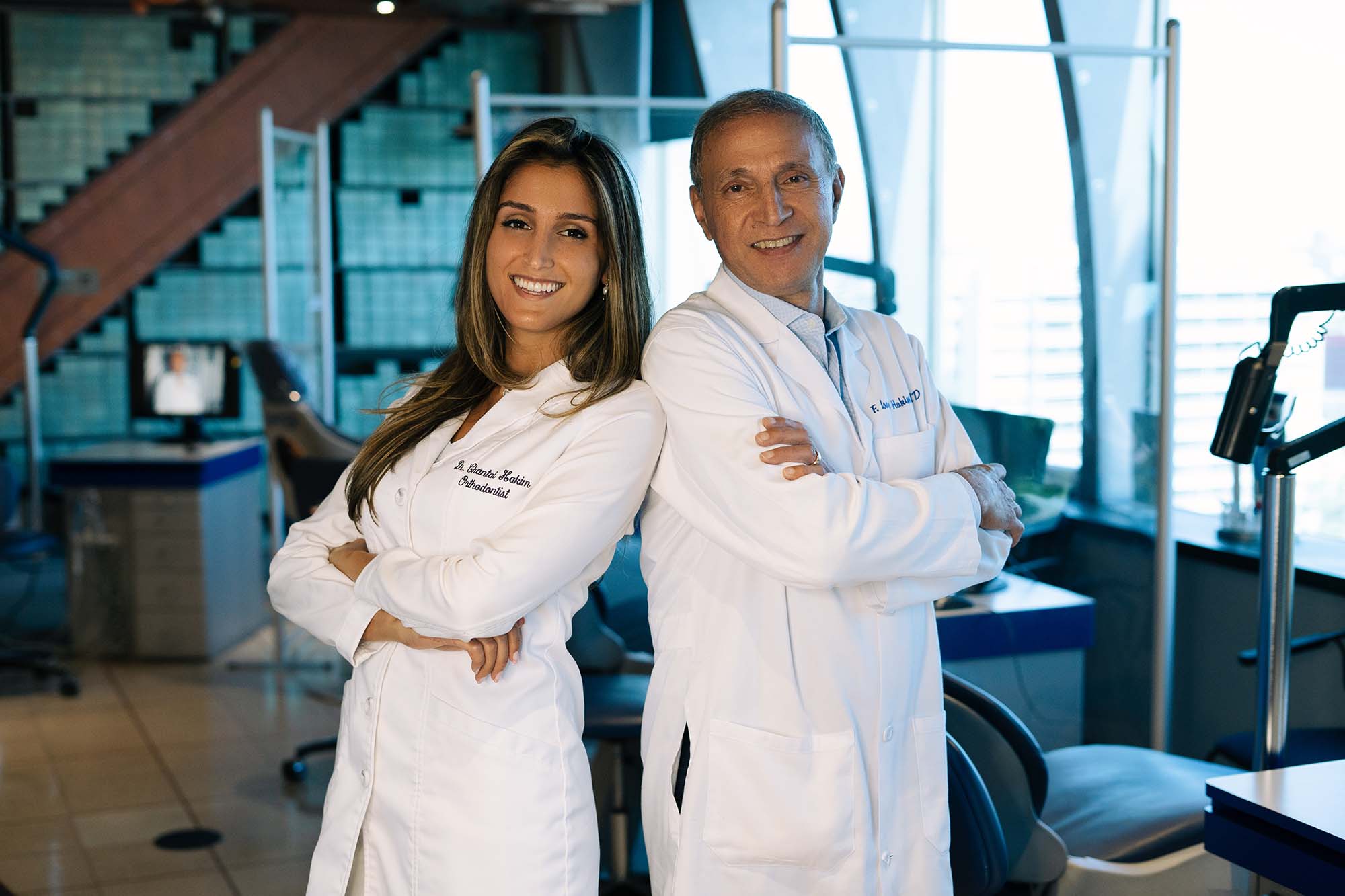
An underbite is one of the bite issues where the diagnosis carries the most weight — so the depth of the practice reading it matters. At The Orthospaceship, both Dr. Chantal Hakim and Dr. Isaac Hakim are board-certified orthodontists and graduates of the Roth Williams Center for Functional Occlusion, a two-year program only about 500 doctors worldwide have completed. That shared training is why an underbite here is classified from the jaw joint outward — and why so few cases have to be referred elsewhere to answer the surgery question.
It also means continuity. Dr. Chantal leads the practice today, carrying forward the functional-occlusion approach her father, Dr. Isaac, has practiced in Beverly Hills for more than 40 years — pairing his depth in TMJ and surgical coordination with her training in craniofacial growth and genetics. Two doctors, one philosophy, one roof: for a family weighing an underbite across generations, that combination is rare.
And it means you are understood. Dr. Chantal treats patients in English, Spanish, and Farsi, so the conversation about your child's bite — or your own — happens in the language you think in.
Your complimentary underbite evaluation, explained
Here is exactly what happens when you come in — so there are no unknowns. You will meet Dr. Chantal Hakim, and depending on the case, Dr. Isaac Hakim, our TMJ and surgical-coordination specialist. Your evaluation includes:
- A 3D CBCT scan on our in-house DEXIS i-CAT
- A digital iTero scan of your teeth — no messy impressions
- An RWISO functional assessment of how your jaw and joints work together
- A precise classification of your underbite: dental, skeletal, or both
You leave with something most people have never been given: a straight answer about what is causing your underbite, whether surgery is genuinely part of the picture, and a clear path forward. There is no cost and no obligation for this evaluation — the point is simply for you to finally know.
Book your complimentary underbite evaluation in Beverly Hills.
Get a precise answer in a single visit, from the doctors who will treat you. Call (310) 271-7287 or request your evaluation online.
Underbite Correction: Frequently Asked Questions
Does an underbite always require surgery?
No. Many underbites are dental — the teeth are misaligned but the jaws are proportioned normally — and can be corrected with braces or clear aligners alone. Surgery is generally considered only for severe skeletal underbites, where the lower jaw itself sits forward, and even then not in every case. Accurate classification, ideally with 3D imaging, determines whether surgery is truly needed.
Can braces or clear aligners fix an underbite?
For dental and milder underbites, yes — braces or clear aligners such as Invisalign can reposition the teeth into a healthy bite. What they cannot do on their own is change the size or position of the jaw bones, so a significant skeletal underbite usually needs braces combined with jaw surgery. Which applies to you depends on your classification.
What happens if an underbite is left untreated?
Underbites tend to worsen gradually rather than improve. Over time, an uncorrected underbite can wear the front teeth unevenly, make some teeth harder to keep clean (which raises the risk of tooth decay and gum disease), and place ongoing strain on the jaw joints and muscles — which for some people contributes to chronic jaw pain or headaches. Correcting the bite addresses these at the source.
Can you fix an underbite naturally or on your own?
No. An underbite is a structural issue involving tooth and jaw position, so there is no exercise, device, or at-home method that can safely fix an underbite — and attempting to fix an underbite without professional care can cause harm. The good news is that professional correction is well established, and the first step is simply an evaluation to learn what your underbite actually involves.
My child has an underbite. What age should they be seen?
Sooner than most parents expect. An early evaluation lets us watch the jaws as they grow and act at the right moment — sometimes guiding growth with an expander or reverse-pull mask before an underbite becomes harder to correct. Being seen early rarely means starting treatment early; it means not missing the window.
Am I too old to fix an underbite?
No. Adult underbites are corrected routinely. Age does not decide whether correction is possible — it influences which path (orthodontics alone, or orthodontics coordinated with jaw surgery) gets you there.
How long does underbite treatment take?
Treatment time varies with the type and severity. Dental cases treated with orthodontic treatment — braces or clear aligners — typically run about 12 to 24 months, while skeletal cases involving surgical coordination take longer. We give you a realistic timeline and treatment plan for your specific situation at your evaluation, once we know what we are treating.
What does underbite treatment cost?
Treatment investment varies based on the type of correction your bite needs — a straightforward aligner case and a surgical case are very different. Many dental plans include orthodontic benefits, and we verify your coverage during your consultation so you have real numbers, not estimates.
Book your underbite evaluation in Beverly Hills
You do not have to decide anything today except to find out what your underbite actually involves. Book a complimentary underbite evaluation at The Orthospaceship — one visit, a precise 3D diagnosis, and a straight answer about your options, whether or not surgery is part of the picture.
Call us at (310) 271-7287 or request your evaluation online.