
If a dentist has told you that your child has a crossbite, you are likely weighing the question that hangs over almost every early bite issue: do we treat it now, or wait and watch? And if you are an adult who has noticed your bite sitting off-center, one side of your teeth wearing faster than the other, or your jaw shifting when you close, you may be wondering how much those years of waiting have cost.
Both questions have the same answer, and it is not really about age. At The Orthospaceship in Beverly Hills, Dr. Chantal Hakim looks first at what a crossbite is doing. A crossbite, where some upper teeth close inside the lower teeth instead of outside them, is not only a matter of crooked teeth. It is a matter of force and direction, because a bite that meets in the wrong place often pushes the lower jaw off its natural path to close. Whether you are a parent across Los Angeles deciding on timing or an adult deciding whether it still matters, the real question is the same: is this bite steering the jaw off course? That is what we measure.
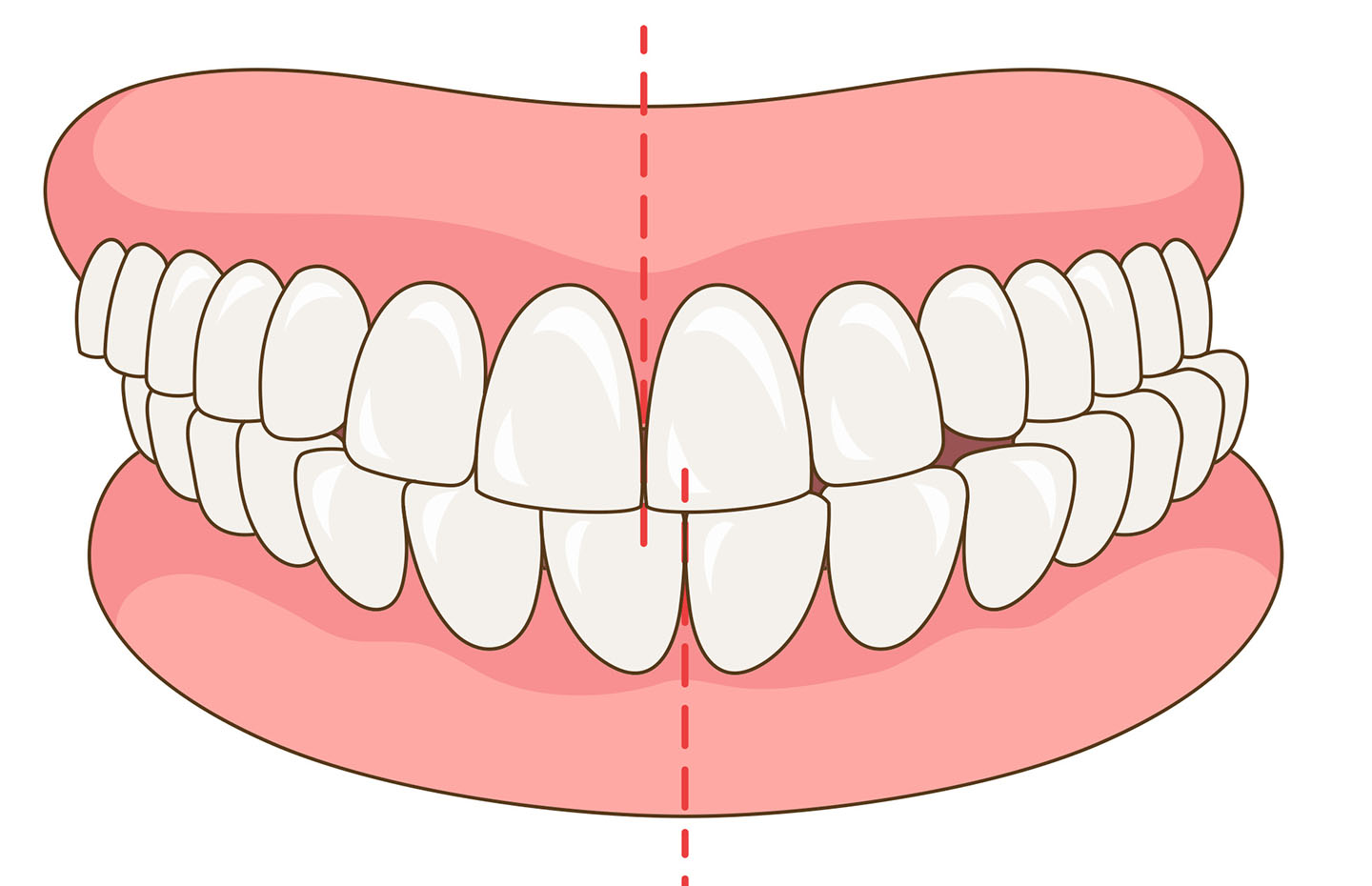
What a crossbite is, and why the type matters
A crossbite is a common form of malocclusion, affecting an estimated 4% to 23% of people depending on age. It happens when upper and lower teeth do not meet the way they should: instead of the upper teeth sitting slightly outside the lower teeth, some of them close inside.
Where it happens shapes what it means:
- A posterior crossbite affects the back teeth, where the upper back teeth bite inside the lower ones. It is the most common type, and the one most likely to make the jaw shift.
- An anterior crossbite affects the front teeth, where the upper front teeth sit behind the lower front teeth. It overlaps closely with an underbite.
A crossbite can involve a single tooth or multiple teeth, one side or both, and it can be dental (the teeth are out of position) or skeletal (the jaws themselves are mismatched, often a narrow upper jaw).
What matters most is not the label but the behavior. In many crossbites the jaw cannot close straight, so it slides to one side to find a bite that works. Orthodontists call this a functional shift, and it is the part a quick look in the mirror misses. Crossbites usually trace back to genetics, but habits and breathing can play a role too: prolonged thumb sucking, mouth breathing that keeps the tongue low and narrows the upper jaw, and delayed loss of baby teeth can all nudge a crossbite into place.
A crossbite is a type of malocclusion in which one or more upper teeth close inside the lower teeth instead of outside them. It can occur at the back of the mouth (a posterior crossbite) or the front (an anterior crossbite), on one or both sides. When the bite forces the lower jaw to shift sideways to close, it is called a functional crossbite, and correcting it early can prevent uneven jaw growth in children and uneven tooth wear in adults.
Why timing matters more with a crossbite than almost anything else
Here is why a crossbite is worth taking seriously, and why timing carries so much weight.
In a child, the jaws are still growing, and they grow along the path the bite gives them. When a crossbite forces the jaw to close off to one side day after day, growth can follow that shift, and a functional problem can quietly become a structural one: an asymmetry built into the developing face and jaw. Caught inside the growth window, that same pull is often straightforward to redirect. This is the real heart of the "treat now or wait" question, and it is answered not by a child's age but by whether the bite is actively steering growth. It is also why orthodontists recommend a first screening by around age 7, when a crossbite can be caught before the jaws mature.
In an adult, growth is complete, but the forces do not stop. A crossbite loads the teeth and jaw joints unevenly, which can show up as enamel wear on one side, an off-center midline, teeth grinding, or strain in the jaw joints that contributes to TMJ disorders over time.
This is exactly what the Roth Williams functional-occlusion approach is built to read. Both Dr. Chantal and Dr. Isaac Hakim are trained in it, and it starts by finding where the jaw naturally wants to close, then comparing that to where the crossbite forces it. The difference is the diagnosis. Dr. Chantal's advanced training in craniofacial growth and development, including graduate research in the genetics of facial development, gives this real value in a growing child, where reading the direction of growth early is everything. And because we take a 3D scan in-house, we can see the asymmetry in the jaws and joints directly, instead of estimating it from the outside.
In one visit, you will know whether the crossbite is affecting the jaw, and whether now is the right time to act.
Book a complimentary crossbite evaluation.
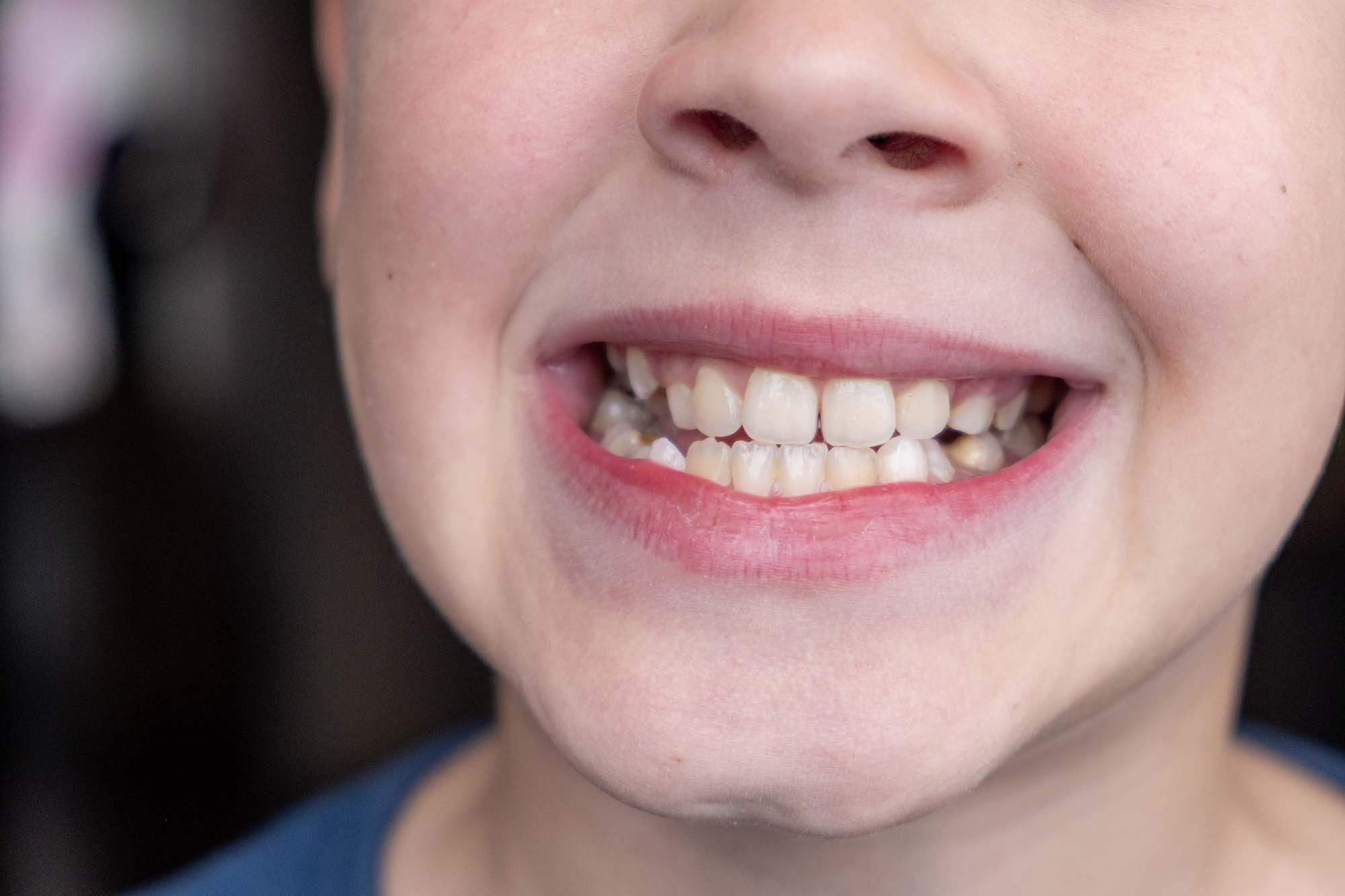
An open bite maloccluson can make eating foods like sandwiches especially challenging.
Signs a crossbite may be affecting the bite
A crossbite is not always obvious, and some of its signs are easy to miss. It is worth an evaluation if you notice any of these, in your child or in yourself:
- The jaw shifts to one side when biting or closing
- Upper teeth bite inside the lower teeth on one or both sides
- The chin, smile, or dental midline looks slightly off-center
- One side of the teeth is wearing faster than the other
- Difficulty chewing, or a habit of chewing on one side
- Teeth grinding, or jaw discomfort and muscle soreness
- In children: a family history of crossbite, or the delayed loss of baby teeth
No single sign confirms a crossbite, but together they are the pattern we look for and measure.
Crossbite treatment in Beverly Hills
Because a crossbite is a problem of position and force, crossbite treatment works by removing the interference so the jaw can close where it should. The right approach depends on the type of crossbite and, for children, where they are in growth.
When a narrow upper jaw is the cause — a palatal expander gently widens the upper palate so the upper teeth sit back outside the lower teeth and the jaw closes straight. Expanders work with the natural growth of the palate, which is why they are most effective in children, generally under about age 14, before the two halves of the upper jaw fuse. This is also why adults are rarely candidates for a standard palate expander, and why a skeletal crossbite is harder to correct without surgery once growth is complete.
When individual teeth are out of position — braces or clear aligners such as Invisalign can move them into a correct bite. Traditional braces work for crossbites at essentially any age, while Invisalign clear aligners suit mild to moderate crossbites. Aligner treatment typically runs about 18 months to 3 years depending on complexity, and depends on consistent daily wear.
When the crossbite is skeletal and growth is complete — the plan is built around the jaw relationship itself, sometimes coordinating orthodontics with jaw surgery for severe cases. Our in-house imaging and functional assessment tell us which of these you are actually dealing with, so crossbite treatment fits the cause rather than a one-size template.
Whatever the path, results are held with a retainer, because a corrected crossbite can relapse without one.
Not sure whether it is time to act? A complimentary evaluation answers exactly that — for you or your child. Request yours online or call (310) 271-7287.
Not sure whether it is time to treat?
A complimentary evaluation answers exactly that, for you or your child.

What correcting a crossbite changes
When a crossbite is corrected, the jaw finally closes where it is meant to. For a child, growth can continue straight instead of following a shift, protecting the symmetry of the developing face. For an adult, chewing evens out, the accelerated wear on one side slows, and the jaw joints carry a balanced load again.
There is an aesthetic side, too. As the bite centers, an off-center smile or midline often settles into balance, and the face reads as more even. But the deeper result is quieter and structural: a bite that finally works with the jaw instead of against it, and stays that way.
Why Los Angeles families choose The Orthospaceship for crossbite correction
Crossbites are most often caught in childhood, which makes who evaluates them matter. Dr. Chantal Hakim brings advanced training in craniofacial growth and development to that decision, including graduate research in the genetics of facial development, so a growing child's crossbite is read for where it is heading, not only where it sits today.
That developmental lens works alongside the functional-occlusion training she and Dr. Isaac Hakim both completed at the Roth Williams Center, and a fully in-house diagnostic setup, so a "treat now or wait" decision is made from real 3D evidence rather than a wait-and-see guess. And because so many families across Los Angeles speak more than one language at home, Dr. Chantal treats patients in English, Spanish, and Farsi.

Your complimentary underbite evaluation
The purpose of your first visit is to answer the question you came in with: does this crossbite need treatment, and if so, when? You will meet Dr. Chantal Hakim, who examines how your bite closes and where the jaw shifts to find it. We take a 3D scan on our in-house DEXIS i-CAT and a digital iTero scan, and complete an RWISO functional assessment that maps where the jaw wants to close against where the crossbite forces it.
For a child, you leave knowing whether the growth window favors acting now or watching closely, and why. For an adult, you leave knowing what the crossbite has affected and how it can be corrected. Either way, the evaluation is complimentary, and you leave with a clear answer instead of a maybe.
Book your complimentary crossbite evaluation in Beverly Hills.
Get a clear read on timing and treatment in a single visit, from the doctors who will treat you. Call (310) 271-7287 or request your evaluation online.
Crossbite Correction: Frequently Asked Questions
At what age should a crossbite be corrected?
There is no single magic age, but crossbites are often best treated while a child is still growing, which is why orthodontists recommend a first screening by around age 7. Catching a crossbite in the growth window can guide the jaws before they mature and often makes treatment simpler. That said, crossbites can be corrected at any age.
Can a palate expander fix a crossbite?
Often, yes, when the crossbite is caused by a narrow upper jaw. A palatal expander gently widens the upper palate so the upper teeth sit back outside the lower teeth. It works best in children, generally under about 14, while the two halves of the upper jaw can still be guided apart.
Why can't adults usually get a palate expander?
In adults, the two halves of the upper jaw have fused, so a standard expander can no longer widen the palate the way it does in a growing child. Adults with a skeletal crossbite may need surgically assisted expansion or another approach, which is one more reason accurate diagnosis matters.
Can a crossbite be fixed in adults?
Yes. Adult crossbites are corrected routinely, with braces or clear aligners such as Invisalign for dental cases, and with more involved treatment, sometimes including surgery, for skeletal ones. What changes with age is the method, not whether correction is possible.
What happens if a crossbite is left untreated?
An untreated crossbite tends to compound. In children it can drive uneven jaw growth and facial asymmetry; in anyone it can cause uneven tooth wear, enamel damage, teeth grinding, gum recession, and strain that contributes to TMJ disorders. Correcting the bite removes the force causing these.
Can a crossbite affect speech?
It can. Because a crossbite changes how the teeth and jaw meet, it can affect the formation of certain sounds, especially in children who are still developing speech. Correcting the bite often makes those sounds easier to produce.
What is the difference between a crossbite and an overbite?
They describe different problems. A crossbite means upper teeth close inside the lower teeth, often making the jaw shift sideways. An overbite means the upper front teeth overlap too far in front of the lower ones. A person can have both, which is one reason an exam matters more than a mirror.
Can you fix a crossbite naturally?
No. A crossbite involves the position of the teeth and jaws, so there is no exercise or at-home method that safely corrects it. The encouraging part is that professional crossbite treatment is well established and, especially in children, often straightforward when started at the right time.
What does crossbite treatment cost, and will insurance cover it?
The investment depends on the type of crossbite and the treatment it needs, from a straightforward expander or aligner case to more involved skeletal correction. Many dental and orthodontic plans include benefits that apply, and we verify your specific coverage during your consultation so you have real numbers.
Book your crossbite evaluation in Beverly Hills
Whether it is your child's bite or your own, you do not have to decide on treatment today, only to find out where things stand. Book a complimentary crossbite evaluation at The Orthospaceship, and get a clear read on the crossbite, the timing, and your options.
Call us at (310) 271-7287 or request your evaluation online.